


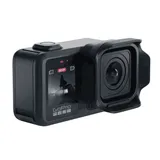
MISSION 1
- Massive leap in image quality and low-light performance across 6 generations (1-inch sensor & GP3).
- { "New thermal design and high-capacity Enduro 2 battery overcome the HERO9's biggest weakness": "overheating." }
- A solid investment to ensure you never miss a shot, provided you can accept the higher price and weight.
Key Factors
Target Audience and Massive Price Gap
Professional video production (MISSION 1) vs. casual daytime recording (HERO9). A used HERO9 is cheap, but does it meet your needs?
Biggest Concern: HERO9 Overheating
The HERO9 risks severe thermal shutdowns during long, high-res takes. The MISSION 1 offers a completely different level of thermal management and battery stability.
Generational Gap in Image Quality, Slow-mo, and Low Light
The HERO9 holds its own in daylight. For up to 16x slow-mo (4K/8x), night shooting, or 10-bit/Log profiles, the MISSION 1 is the only choice.
Size, Weight (158g vs 207g), and Handling
The HERO9 is about 49g lighter and highly maneuverable. The larger, heavier MISSION 1 requires you to be mindful of the physical strain when mounting.
1. The Main Point: Different Intended Uses and a Massive Price Gap
When comparing the GoPro MISSION 1 and the GoPro HERO9 Black, the first thing to clarify is that they are built for completely different levels of use.
The 2026 flagship, the GoPro MISSION 1, features a large 1-inch sensor and is designed as a cinematic camera for professionals and high-end enthusiasts, built with cinematic expression and heavy color grading in mind. Naturally, it comes with a premium price tag. The HERO9 Black, on the other hand, is a 2020 model mostly found on the used market today. A used unit in good condition can be bought for less than half—sometimes nearly a third—of the price of a new MISSION 1.
So, this comparison isn't really about which has better specs. It's about finding the right balance between use case and ROI: Are you satisfied with casual daytime action recording (HERO9), or do you want to invest in top-tier video production (MISSION 1)?
2. Usability and the Fatal Flaw: HERO9's Overheating vs. MISSION 1's Stability
Beyond the spec sheet, the most critical difference when choosing a camera based on your needs is its stability during long recording sessions (thermal management).
When recording continuously in high-res settings like 4K, the HERO9 Black suffers from a severe overheating vulnerability that forces the camera to shut down. Whether you are outside in the summer heat or shooting a stationary vlog indoors without airflow, there is a constant risk that recording will cut out after just 20 to 30 minutes.
The MISSION 1 counters this with a larger body featuring superior thermal dissipation and a high-capacity "Enduro 2" battery, allowing for up to 5 hours of continuous recording. It also includes a "Magnetic Power Door" that enables external power bank use while maintaining waterproofing. By eliminating the constant fear of overheating ruining an important take, the MISSION 1 gives you the peace of mind to keep rolling during long shoots or stationary recordings—a huge part of its real-world value.
3. Image Quality and Performance: HERO9 Holds Up in Daylight, MISSION 1 Dominates Low Light, Slow-mo, and Editing
When it comes to pure image quality and creative flexibility, the shooting environment (lighting) and your creative intent create a definitive gap.
- Standard Daytime Video (Well-lit scenes): The HERO9 Black’s 5K/30fps, 4K/60fps, and HyperSmooth 3.0 stabilization still offer plenty of quality for sunny outdoor activities, travel records, and social media videos. If your goal is to stitch together short clips (a few minutes each) into a daytime vlog, a cheap, used HERO9 will do the job just fine.
- The Massive Gap in Slow-Motion (Up to 16x vs. Up to 8x): The MISSION 1 completely outclasses the HERO9 Black in slow-motion performance, a staple of action recording. The HERO9 maxes out at 60fps (2x slow-mo) in 4K; to get 8x slow-mo, you have to drop the resolution down to 1080p. The MISSION 1, however, can shoot incredibly fast action at up to 240fps (8x slow-mo) in crisp 4K. Furthermore, it supports up to 480fps (16x slow-mo) in 1440p and 1080p. This allows you to dramatically slow down intense, split-second action or splashing water with incredible smoothness and clarity.
- Low Light: Nighttime and Indoors (The Decisive Difference): The HERO9 Black (1/2.3-inch sensor) struggles in low light, producing heavy noise and erratic stabilization at dusk, at night, or indoors. Thanks to its "large 1-inch sensor" and "GP3 Processor," the MISSION 1 captures clean, low-noise footage even in low-light environments. If you plan to shoot at night, the MISSION 1’s advantage is absolute.
- Color and Post-Processing Flexibility: The MISSION 1 supports 10-bit color for smooth gradients and the professional GP-Log2 profile. This allows you to capture beautiful sunsets and skies without the banding (tone jumping) common in the HERO9 Black (8-bit color), giving you full control over professional color grading.
4. Size and Weight: The Nimble HERO9 Black vs. The Heavy-Duty MISSION 1
While the MISSION 1 boasts overwhelming performance and stability, the HERO9 Black wins when it comes to the maneuverability expected of an action camera.
- GoPro HERO9 Black: Approx. 158g
- GoPro MISSION 1: Approx. 207g
Because it houses a large 1-inch sensor, advanced thermal structures, and a massive battery, the MISSION 1 is about 49g (roughly 31%) heavier and noticeably larger than the HERO9 Black.
That 49g difference is hard to ignore when you factor in neck strain from a helmet mount, wobbling on a chest mount, or arm fatigue when extending a selfie stick. For intense sports or activities where you want a camera so light you forget it's there, the compact and lightweight HERO9 Black is often much easier to handle.
5. Conclusion: Balance Your Needs, Budget, and Stability
- Who should choose the GoPro HERO9 Black (Used):
- Those who record in short bursts (a few minutes at a time) and can avoid the risk of overheating.
- Those who mount the camera on a helmet and want something as light as possible (approx. 158g).
- Those who want to try a GoPro while keeping initial costs as low as possible.
- Who should choose the GoPro MISSION 1:
- Those willing to pay more than double to get the incredible image quality and night-shooting capabilities of a 1-inch sensor.
- Those looking to produce professional-level videos or YouTube content using 10-bit color and GP-Log2.
- Those who don't mind the 207g bulk and prioritize top-tier camera quality above all else.
When you factor in the cost and frustration of a missed shot, the price premium becomes a worthwhile insurance policy for guaranteed recording. If you are adopting a GoPro as your primary camera today, investing in the expensive but reliable MISSION 1 is a far safer bet than choosing a HERO9 from several generations ago. Furthermore, if you are looking for a balanced alternative to the MISSION 1 in terms of price and performance, your real point of comparison shouldn't be the HERO9, but rather the current standard model where overheating issues have been resolved: the GoPro HERO13 Black.
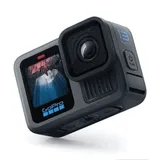 vs
vs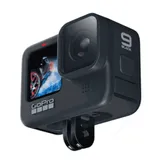
GoPro HERO13 Black vs GoPro HERO9 Black
This article compares the latest 2024 model, GoPro HERO13 Black, with the 2020 model, GoPro HERO9 Black, focusing on their video recording capabilities and body specs.


