


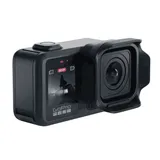
MISSION 1
- 8K/30fps recording and incredible low-light performance thanks to the 1-inch sensor and GP3 processor
- Massive leap in creative flexibility, including up to 16x slow motion and GP-Log2 (with LUT support)
- Drastically improved usability with the Enduro 2 battery, magnetic latch mount, and magnetic power delivery
Key Factors
Massive Upgrade in Image Quality and Slow Motion
The MISSION 1 steps it up with a 1-inch sensor and GP3 processor, enabling 8K/30fps and up to 16x slow mo. This is a huge leap from the HERO12 Black’s 5.3K and 8x max slow mo.
Size and Weight Differences
The HERO12 Black is light and compact at around 154g. The MISSION 1 is noticeably bulkier and heavier at roughly 207g, making a big difference in portability.
Mounting and Power Upgrades
The MISSION 1 introduces a quick-release magnetic latch mount and magnetic charging capabilities, alongside a larger 2150mAh battery.
Massive Upgrades in Image Quality and Slow Motion
The GoPro HERO12 Black is a highly capable camera, featuring a 1/1.9-inch sensor and GP2 processor. It handles 5.3K/60fps and 4K/120fps video effortlessly, plus up to 8x slow motion (2.7K/240fps, 1080p/240fps).
In contrast, the GoPro MISSION 1 packs a next-gen 1-inch sensor and the GP3 processor. Its maximum resolution jumps to a staggering 8K/30fps, and it supports 4K/120fps open-gate recording. Thanks to the larger sensor, it captures crisp, noise-free footage in low-light conditions—like at night or in dimly lit rooms—where the HERO12 Black typically struggles. The dynamic range has also seen a significant boost.
When it comes to slow motion, the MISSION 1 pushes the envelope with up to 16x (1440p/1080p) ultra-high frame rate recording straight out of the standard shooting mode. This allows for much more dramatic slow-mo shots compared to the HERO12 Black’s 8x limit. Color grading flexibility has also leveled up, moving from the HERO12 Black’s 10-bit GP-Log to the new LUT-supported GP-Log2, offering professional colorists and filmmakers far more creative freedom.
Size and Weight: The Nimble HERO12 Black vs. the Hefty MISSION 1
While the MISSION 1 brings major upgrades in performance and battery capacity, the HERO12 Black clearly wins when it comes to portability and agility.
Looking at the weight, the HERO12 Black comes in at around 154g, while the MISSION 1 weighs about 207g—a hefty 53g (roughly 34%) increase. Even though the battery capacity only grew by about 25% (from 1720mAh to 2150mAh), the camera's body itself has become noticeably larger and heavier.
If you're shooting handheld, mounting the camera on the end of a selfie stick, or attaching it to a helmet or chest mount for long periods, the HERO12 Black is much lighter and puts less strain on your body. For pure action sports, the HERO12 Black remains a fantastic option.
Upgrades to Mounting, Battery, and Power Systems
This generational leap has also brought massive improvements to overall usability and workflow.
- A New Mounting System: While the HERO12 Black uses the traditional folding fingers and a 1/4-inch thread, the MISSION 1 adds a "magnetic latch mount." This lets you quickly snap the camera on and off accessories in a second, without having to mess with thumbscrews.
- Battery and Power Workflow: Compared to the HERO12 Black's standard Enduro battery (1720mAh), the MISSION 1 packs the new "Enduro 2" battery (2150mAh), stretching continuous standalone recording to up to 5 hours. It also supports USB-C magnetic power delivery via the "Magnetic Door and Power Cable Kit," making it easy to shoot long takes while keeping the camera fully waterproof.
Bottom Line: Which Should You Choose?
If you're looking for the absolute best image quality (8K/30fps, 1-inch sensor low-light performance, and rich dynamic range), 16x slow motion, quick-swap magnetic mounting, and stable long-term recording, the GoPro MISSION 1 is the clear winner.
On the other hand, if you prioritize a lightweight and compact setup for easy carrying, only need 4K/5.3K for daytime shooting, or want a more budget-friendly option, the 154g HERO12 Black is still an incredibly compelling choice.


