


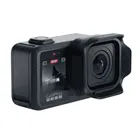
MISSION 1
- Large 1-inch sensor and GP3 processor delivering stunning 8K30 and 4K120 video
- 10-bit GP-Log2 and built-in HyperSmooth stabilization for high-end cinematic production
- Removable battery and magnetic external power pass-through for demanding, extended shoots
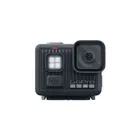
LIT HERO (2025)
- Ultra-compact, featherweight form factor that slips effortlessly into any pocket
- Built-in front LED light for ready-to-shoot illumination in low-light and nighttime settings
- Budget-friendly entry point, perfect for casual vlogging and spontaneous everyday clips
Key Factors
Core Specs & Image Quality
The MISSION 1 boasts a large 1-inch sensor with 8K30/4K120 and in-camera HyperSmooth. The LIT HERO (2025) tops out at 4K60 with app-based stabilization.
Battery & Front Display
The MISSION 1 features a swappable Enduro 2 battery and dual screens. The LIT HERO uses an integrated battery and a rear-only display.
Form Factor & Built-in LED
The LIT HERO (2025) is significantly smaller and lighter, featuring a front-facing LED light tailored for hassle-free everyday shooting.
Core Specs & Image Quality
The GoPro MISSION 1 and GoPro LIT HERO (2025) sit at completely opposite ends of the spectrum when it comes to target audience and imaging capabilities.
The MISSION 1 is a cinematic powerhouse powered by a large 1-inch sensor and GoPro’s latest GP3 processor. It supports high-resolution, high-frame-rate recording at up to 8K/30fps and 4K/120fps, alongside 10-bit GP-Log2 for rich dynamic range and color grading flexibility. With hardware-level HyperSmooth stabilization built directly into the camera, it keeps footage rock-steady even during intense action. For slow-motion capture, it can go up to 8x (1080p/240fps).
In contrast, the LIT HERO (2025) is tailored for casual users and travelers who want quick, frictionless recording. Its maximum recording modes are 4K/60fps and 1080p/60fps (up to 2x slow motion). Rather than utilizing in-camera stabilization, video smoothing is applied in post via the GoPro Quik app. While it omits advanced options like 10-bit color and Log profiles, it delivers more than enough punch to elevate everyday video well beyond typical smartphone footage.
Battery Life, Displays & Expandability
The hardware layout and operational workflows also mark a clear divide between the two cameras.
The MISSION 1 features both front and rear displays, making framing selfies and vlogs effortless. Powering the unit is a removable 2,150mAh Enduro 2 battery designed for extended shooting sessions. For studio or all-day field work, it also supports continuous USB-C power via an optional magnetic door and cable kit.
The LIT HERO (2025) strips things down to a single rear touchscreen, omitting the front display entirely. Its battery is fully built-in, meaning you cannot swap in fresh spares on the fly. That said, both cameras support GoPro's quick-release magnetic latch mounting system, making it just as fast to snap either camera on and off various mounts and accessories.
Portability & The LIT HERO’s Built-in Front LED
When it comes to pure footprint and carry weight, the LIT HERO (2025) holds a massive advantage.
Its ultra-compact chassis fits neatly into a pocket, giving it unbeatable grab-and-go mobility for minimal-pack travel and daily walkarounds. Crucially, the LIT HERO features a built-in front-facing LED light right out of the box. This lets you illuminate subjects in dim rooms, dark venues, or nighttime streets without packing separate lighting gear, making it a truly versatile 24/7 point-and-shoot companion.
Summary: Which One Should You Buy?
The MISSION 1 and LIT HERO (2025) serve entirely different creative purposes. The right pick simply comes down to what you prioritize in your setup:
- Go with the MISSION 1 if: You need 8K detail, 4K120 slow motion, robust in-camera stabilization, swappable power, and professional-grade video tools for serious filmmaking.
- Go with the LIT HERO (2025) if: You want the smallest, lightest action cam possible with built-in lighting for spontaneous, low-friction daily vlogging and casual snapshots.


