


Key Factors
Shooting performance differs
The supported resolution and image stabilization are different
Body size and design differ
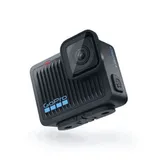
The HERO (2024) has a built-in mount, but lacks the front display
Difference in micro SD support
The HERO (2024) supports 1TB micro SD cards
Differences in Shooting Performance
The major difference in shooting performance between the HERO (2024) and HERO (2018) is support for 4K and 2.7K resolutions. While the HERO (2018) only supported up to 1440p, the HERO (2024) can handle 4K at 30fps. Though 30fps is a lower frame rate, making it difficult to create slow-motion footage in post-production, it’s still adequate for regular 4K video recording.
On the other hand, the HERO (2018) shines with its 60fps support at full HD resolution, which is worth noting. When it comes to full HD shooting, the HERO (2018) offers a higher frame rate than the HERO (2024).
Another key difference is image stabilization. The HERO (2018) has built-in stabilization, whereas the HERO (2024) lacks this feature in the hardware. Instead, stabilization must be added post-production using the QUIK app.
If you’re comfortable using the QUIK app, this isn’t an issue, but keep in mind the extra step of applying stabilization and exporting the video.
Differences in Size and Design
The HERO (2018), being from the HERO6 generation, was relatively compact, but the HERO (2024) is even smaller and lighter.
In terms of features, the HERO (2024) has a built-in mount, while the HERO (2018) does not. On the flip side, the HERO (2024) lacks a front display, whereas the HERO (2018) features a monochrome front display.
Differences in microSD Support
One often overlooked but significant difference is the supported microSD card capacity.
As the latest model, the HERO (2024) supports up to 1TB microSD cards, allowing for extended recording sessions without swapping out the SD card, especially when using an external battery.
In contrast, the HERO (2018) only supports microSD cards up to 128GB. While 128GB is sufficient for the HERO (2018) since it maxes out at 1440p resolution, it’s a relatively small capacity by today’s standards. If you plan to record for long periods, even considering the price difference, the HERO (2024) is the better choice.


